By: Todd “DG” Davis
Rapindustry.com
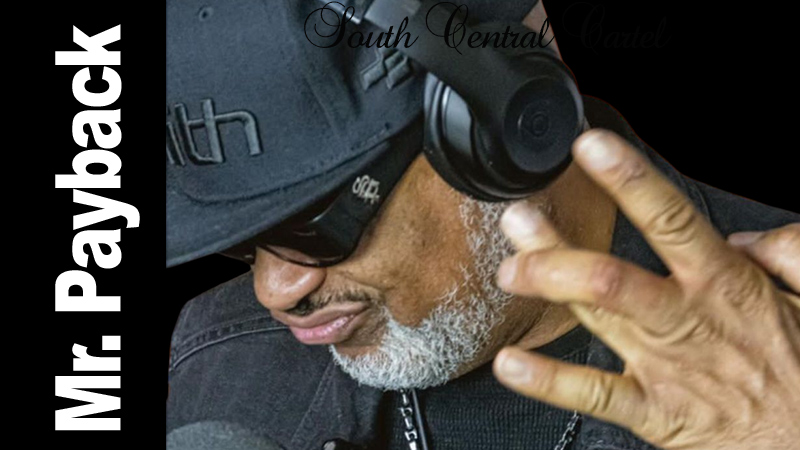
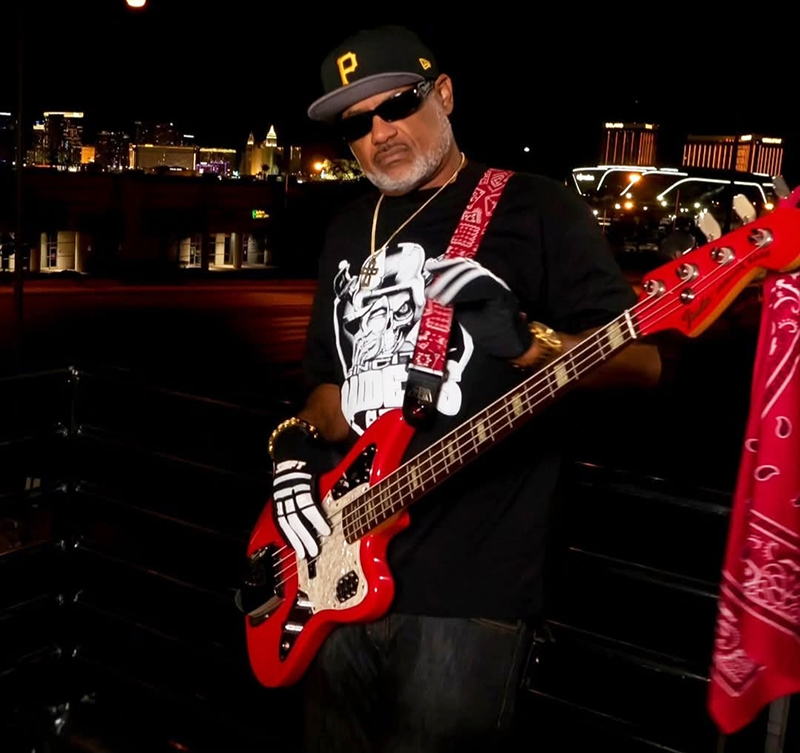
If West Coast hip-hop had a pulse, Clinton “Mr. Payback” Sands would be the one keeping it thumping. The funky bass wizard behind Ice Cube, Mack 10, Public Enemy, and a roster of legends, Payback doesn’t just play notes — he speaks through them. From studio sessions that became classics to grooves that sneak up and grab you by the soul, he’s been shaping the sound of the streets and the charts for decades. In this interview, we peel back the boards, the strings, and the stories, getting the inside track on how a kid from the Left Coast turned funk into a lifestyle and left a mark that still reverberates through hip-hop today.
Your bass-lines are legendary. How did a kid from the West Coast turn a simple groove into the heartbeat of an era?
Mr. Payback: First, thank you for this interview. I was baptized in the funk. A school friend of mine’s father managed GEORGE CLINTON, and George needed a few kids for a radio commercial ad for the song “One Nation Under a Groove.” So I was introduced to funk music early. I met BOOTSY there, and I wanted to be like him.
You’re known as “The Star-Making Music Producer.” What’s the secret sauce behind spotting talent and turning it into legends?
MP: To be great at anything, it starts with passion. You can see it in their eyes.
Working with giants like the late 2Pac, E-40, and Ice Cube — what’s one studio moment that still gives you chills?
MP: So as a kid, I met BOOTSY that one time. Then in 1994, Ice Cube called me to his studio to surprise me. I walked in, and there was BOOTSY and his star bass. I almost passed out. That was the greatest studio experience, period.
G-Funk, West Coast rap, funky bass — how did you cook up a sound that’s instantly recognizable worldwide?
MP: I wanted my bass-lines to poke out like nipples. I had to think outside the box. For example, Mack 10’s first single “Foe Life” — my goal was to play something crazy so people would ask, “Who played that?”
Your production on Spice 1’s 1990-Sick and B-Legit’s Hempin’ Ain’t Easy shaped careers. What was it like in the trenches, making hits before anyone knew they were hits?
MP: I go hard like “Woodpecker Lips!” The Bay has some really talented rappers and producers. It forces you to step your game up.
You’ve seen the music industry at its wildest — from Death Row Records chaos to chart-topping triumphs. What’s one lesson every artist should take from that era?
MP: Be different and learn the business side of music. Put a lot of time into honing your craft.
Creativity or business — which one drives you harder, and can they ever truly be separated?
MP: You have to go hard for both. It’s the music business.
Trickin’ Bikes is a different vibe from the studio. How do custom bikes and hip-hop culture collide in your world?
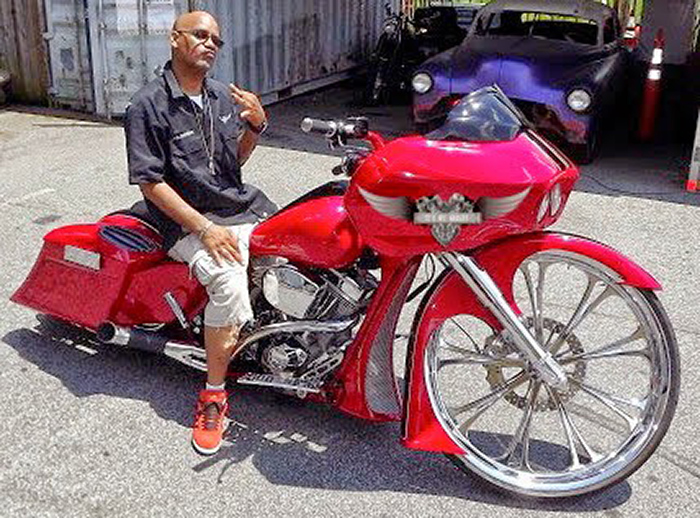
MP: I’ve been riding motorcycles since 1986. In 2010, I got into riding Harley-Davidson baggers. One thing about a custom Harley is the loud sound system. Just like I create different-sounding music, I make different-looking Harleys.
Preserving hip-hop history is one of your missions. What story about the West Coast sound still goes untold that you’re dying to share?
MP: I played bass on COOLIO, Tha Dogg Pound, Mack 10, and K-Dee’s first albums.
You’ve been candid about managing diabetes. How do you turn a personal challenge into a platform that empowers and educates communities?
MP: Simple — I just wish somebody had pushed me to start getting check-ups starting at 30 years old. I probably wouldn’t have diabetes and the loss of two toes.
Your upcoming single “We Got U” brings together icons like Yo-Yo, Ice-T, Mc Lyte, Treach, and Montell Jordan. How did that powerhouse collaboration come together, and why now?
MP: Watching the L.A. fires destroy whole communities was hard to watch. I wanted to do something big to help, so I was reminded of “We Are the World.” From that, I started reaching out to artists and ended up with a great song.
Music for a cause — how does “We Got U” prove that hip-hop can heal, uplift, and rebuild communities in real time?
MP: Hip-hop artists are in the streets and rap about what they see to bring attention to problems in their communities — whether it’s gangs, drugs, or crooked police. Their goal is positive change. Seeing the devastation of the L.A. fires would make anyone want to help.
After 50+ hits and decades in the game, what still fires you up every morning to create, mentor, and innovate?
MP: To affect the youth. I do whatever I want to do. I follow my dreams. Hopefully, I can inspire someone to follow theirs.
Legacy isn’t just about music. How do you want your influence to shape the next generation of artists, producers, and culture shapers?
MP: Just be dedicated and determined. Work hard and believe in yourself.
If you could drop one piece of advice into the mind of every aspiring producer tomorrow, what would it be — no filter?
MP: Just do your very best and don’t let anything stop you.
The post Clinton “Mr. Payback” Sands: Bass, Beats & Badassery (Interview) first appeared on Rap Industry: New Hip Hop, Rap Videos, Music, News, & more..