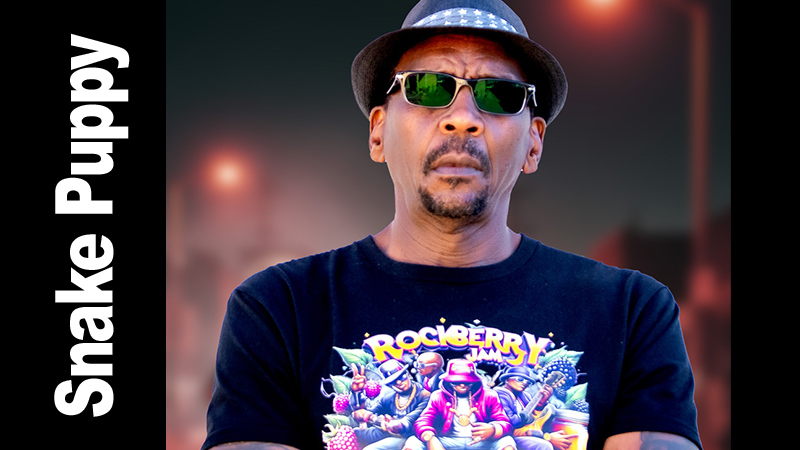
![Christopher “Snake Puppy” Wilson [L.A. Dream Team]: West Coast DNA (Interview)](https://westcoastaftershock.com/wca/wp-content/uploads/2026/03/christopher-snake-puppy-wilson-l-a-dream-team-west-coast-dna-interview.jpg "Christopher “Snake Puppy” Wilson [L.A. Dream Team]: West Coast DNA (Interview)")
By: Todd “DG” Davis
Rapindustry.com
Snake Puppy don’t come from hype — he comes from foundation.
Before the West Coast became a global takeover, before the sound got polished and the industry caught up, there was a movement bubbling straight out of Los Angeles speakers — raw drum machines, heavy bounce, real melody, and pure vision. That early energy helped shape what the world now calls West Coast hip-hop, and at the center of that wave was Snake Puppy, co-architect of the legendary L.A. Dream Team.
This isn’t just another rap story. This is about building something out of nothing — house studios, wires everywhere, ideas turning into records that still knock decades later. It’s about innovation before recognition, wins and losses, brotherhood, evolution, and staying true while the game keeps changing. From shaping the electro-funk bounce that helped open doors for artists like Dr. Dre and Snoop Dogg, to navigating loss, legacy, and a new era of technology, Snake Puppy’s journey is real West Coast history. After this interview was conducted Snake Puppy put together a dope track for this interview (see below)
Looking back to 1985…
We weren’t thinking about legacy. We were thinking about creating something fresh. We had a drum machine, ideas, and confidence. That was enough. The mission was simple — make records people would remember.
The early electro-hop blend…
That sound was already moving in L.A. — Egyptian Lover, World Class Wreckin’ Cru, Uncle Jamm’s Army. The electronic funk was strong in the clubs. The drum machines felt futuristic.
For us, it really showed up on “Rockberry Jam” and “The Dream Team Is in the House.” The difference was melody. A lot of records were straight rhythm-driven. We focused on hooks you could sing, harmonies that stayed with you, and real arrangement. We weren’t just looping beats — we were building songs. That musical layer helped those records last.
“The Dream Team Is in the House!”
When I heard that record playing somewhere we weren’t even present, that’s when it hit. The music had its own legs. That’s when it felt real.
Losing Rudy in 1998…
That wasn’t just a group change. That was my friend. Losing him shifted everything. Every time I step into something creative, that history is with me.
Changes in the group…
We lost Lisa Love. We lost Rudy Pardee. We lost J-Kul. We lost General Jeff. That’s not business — that’s people I built with.
When you lose that many from your original circle, you don’t just keep performing like nothing changed. The group was all of us. The chemistry was all of us.
Performing under that name without them didn’t feel right. I respect what we created too much to treat it casually. That chapter stands as it was.
Kings of the West Coast / Bad to the Bone…
That project was different. It wasn’t produced by Courtney Branch and Tracy Kendricks — the producers behind “Rockberry Jam” and “The Dream Team Is in the House.” That production chemistry mattered.
Without that original team, the sound shifted. The album didn’t connect the way we expected. That’s just being honest.
It showed me how important the right production partnership is. Some combinations create something special that can’t just be recreated.
Transition to production / video…
I wanted to understand more than just the mic. Production, visuals, ownership — all of it matters. Learning that side of the business gave me longevity.
The rise of Gangsta rap…
By the time that movement got strong, I had already stepped away from the group. Rudy teamed up with some fellas and formed the DBS Mob. They leaned into a harder direction and tried to move in that lane.
That was their decision. Every artist chooses their path.
The West Coast was evolving, and different styles were finding space. I’ve always believed identity matters more than switching directions just because the sound around you changes.
Advice to my younger self…
Own your masters. Read every contract carefully. Loyalty is important, but paperwork protects you. And trust your instincts.
Behind-the-scenes story…
“Rockberry Jam” and “The Dream Team Is in the House” didn’t come out of a big commercial studio. They came out of a house studio — a real house setup. Equipment in a room, wires everywhere, making it work.
No fancy budget. No label environment. Just creativity and focus. We were shaping melodies, tightening hooks, running parts back until it felt right.
People hear those records and assume it was some major production situation. It wasn’t. It was built in a house with intention. That’s part of why it still feels authentic.
Impact on today’s artists…
When I hear melody blended with bounce in West Coast music today, I hear pieces of what we contributed. We helped expand what that sound could be.
What keeps you creating…
It’s part of who I am. Music gives direction and clarity. As long as I’m here, I’m creating.
What’s next…
AI music is here. Some people shy away from it — I don’t.
I love music, but I’m not sitting here pretending to be a traditional musician. I use tools. Right now, that tool is Suno. And it works.
To me, it’s no different than when drum machines changed everything. Technology moves forward. The key is how you use it.
I still care about melody. I still care about arrangement. I still care about feel. AI doesn’t replace creativity — it responds to it. You still have to guide it.
You can hear what I’m building right now here
I’m creating in a new era the same way I did in the beginning — using what’s available and making it mine.
How the highs and losses shaped mentoring…
Experience teaches balance. I’ve seen success and I’ve seen loss. I share what I’ve learned so others can move smarter.
“Snake Puppy” legacy…
Melody. Innovation. Consistency. Staying true to the sound while growing. That’s what I want remembered.
Our Interview transformed into this dope track.
The post Christopher “Snake Puppy” Wilson [L.A. Dream Team]: West Coast DNA (Interview) first appeared on Rap Industry: New Hip Hop, Rap Videos, Music, News, & more..