By: Todd “DG” Davis
Rapindustry.com
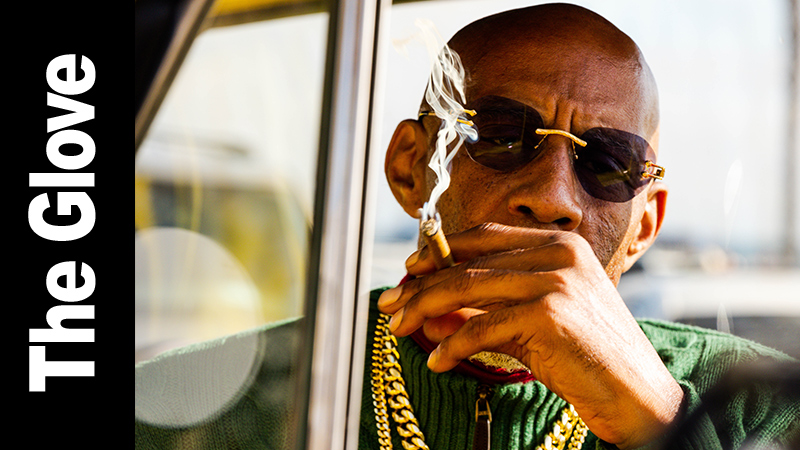
An icon and luminary in the world of West Coast hip-hop, Chris “The Glove” Taylor’s influence runs deep—from his early days DJ’ing in L.A. to helping shape some of the most legendary albums in rap history. His journey is filled with groundbreaking moments, behind-the-scenes stories, and lessons learned along the way. As a producer, engineer, composer, and mentor, Chris continues to push creative boundaries and inspire a new generation of artists.
In this in-depth Q&A, he takes us back to his roots, reflects on his legendary career, and shares what’s next for him and the future of the sound he helped to define. Prepare for an insightful look into the mind of a true musical genius.
You’ve been a key figure in West Coast hip-hop since the early 1980s—how did your beginnings as a Los Angeles DJ shape your sound and creative philosophy?
Becoming a DJ requires studying the music and the records. To be a great DJ, you have to understand measures and styles of rhythm. That helped me once I began creating rhythms, and it helped that I was already an organist from age 12, so I could read music and fully understood how to arrange songs and beats early on. Los Angeles is a very creative city, and you have to have a uniqueness about you to stand out, especially in entertainment. My L.A. DJ mentality helped me maintain my edge as a groundbreaking music producer and catch the attention of people like Dr. Dre.
What do you remember most about appearing in the film Breakin’ and producing “Reckless” for its soundtrack during such a culturally defining moment?
The thing I remember most about Breakin’ isn’t actually appearing in it, but making the move to secure the music deal. The producers were discussing hiring Afrika Bambaataa and the Soul Sonic Force to do the music for the film, and my girlfriend at the time overheard them. She told me to tell them I was the West Coast’s Afrika Bambaataa, and that only an L.A. person needed to do the music for this cultural moment. They hired me on the spot! *Laughs* After I did the music for all the Breakin’ trailers and club scenes, they contacted me and asked if I could make a talkin’ song for the soundtrack because they realized they didn’t have one. That’s what they called “rap” back then. So I took one of the pieces I made for the first dance scene, turned it into a song called “The Only Rapper I Knew,” and asked Ice-T if I could pay him to rap on it. He said, “yes!” *Laughs* The rest is history, I suppose.
Your early collaborations with Ice-T helped merge electro and hip-hop—what made that partnership so impactful, and what were you both trying to push creatively at the time?
Actually, we made music for the Breakin’ films. We were never partners—I wasn’t his DJ; he was my rapper. But I believe it was impactful because we were both committed to being the best at what we did, and you could feel that. With him being a lyricist and me doing the music, I think we were both pushing in different directions—though I didn’t want to continue doing purely rap music. That’s why you won’t see me on any of his early albums.
You contributed to genre-defining albums like The Chronic and Doggystyle. What was the creative environment like during those sessions, and did you realize how influential those projects would become?
When we were making The Chronic, it was a fun, exciting, and sometimes intense time. The sessions were always creative, positive, and lively—we turned every session into a party. After finishing a song, we’d invite people over, eat, drink, and vibe to the music. We always knew the music was special. Snoop used to ask Dr. Dre, “how many records am I gonna sell?” and Dre would reply, “more than Michael Jackson!” Ice-T and I went 4x platinum with “Reckless” in 1984, and Dre had platinum success with Eazy-E, N.W.A., and Michel’le at Ruthless Records. We knew Snoop was talented, and we made the music for ourselves—hoping it would make an impact, which it did.
Some of your work has gone uncredited but still left a lasting imprint—how do you personally view legacy and recognition in hip-hop?
I believe legacy is paramount. How people remember you—both your successes and failures—continues to weigh on you even after you’re gone. Yes, some of my work is uncredited, but I don’t dwell on that. My focus is on today and the future. Still, I look forward to the day when my children see their dad’s name alongside the greats—not just as an engineer but as a creator of some timeless music.
You’ve worn many hats as a DJ, producer, engineer, mixer, and music supervisor—how has that versatility shaped your longevity in the industry?
Being able to do many things has helped keep me working. When I started composing for film and television, I realized how important intellectual properties and longevity are in this industry. Residual checks keep coming in, but you have to put in the work. I believe my longevity isn’t just based on my skills but also on my desire to deliver great results. People enjoy working with me because they love the outcomes.
From hip-hop and electro to R&B and television, what artists, genres, or experiences outside of hip-hop have most influenced your evolution as a creator?
None of my early influences were from hip-hop. They were R&B, Kraftwerk, and some pop music. I wasn’t allowed to listen to the radio as a child because my parents were very religious and believed secular music was bad. I had to sneak to listen to the radio. I wish my dad had headphones back then! My main influences were Leon Sylvers III, Bobby Caldwell, Herbie Hancock, Cameo—and the biggest of all, Parliament-Funkadelic. But I also loved classical and jazz, especially songs like “Phone Tap” and “Funky Fiasco” from those genres. I loved the Baroque movement era.
Looking back over your career, which project or moment best captures who Chris “The Glove” Taylor is as an artist?
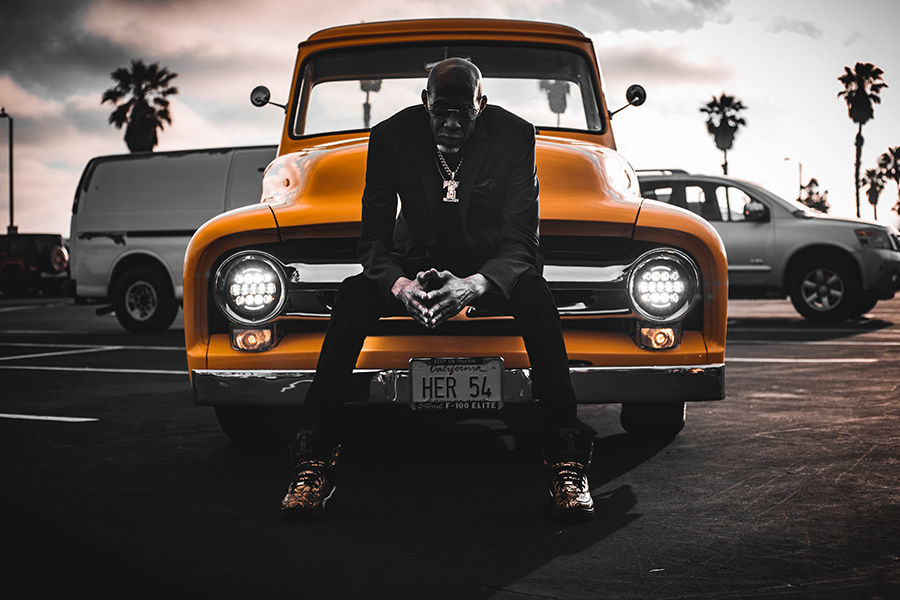
For me, my work with the group Po, Broke & Lonely really captures the best version of me as an artist—musician, writer, and producer.
You continue to create and produce music today—what excites you most about making music now compared to earlier decades?
The feeling and excitement of creating are still the same. Making music is what gets me up in the morning. The eras don’t matter; people will always like what they like. I approach every day by making music that I enjoy. If I do that, I’m okay. Being a good DJ and knowing what gets people dancing helps a lot.
Your semi-recent work on Fatlip’s single “Dust in the Wind” highlights your continued relevance—what drew you to that project, and how did that collaboration come together?
That was simply a beat purchase, but I’m glad they reached out. I love working on different projects—keeps me inspired.
How has your experience as a music supervisor on BET series like Tiny and Toya and Monica: Still Standing influenced how you now approach music and storytelling?
Working as a music supervisor and composer for TV and film has taught me a lot about musical concepts that are the opposite of what I learned in hip-hop and popular music creation. It’s refined my production style, how I approach creating music, and what I want to say with it.
Are there any current projects or collaborations you’re excited to share?
Yes! I’m working on a new project called Redshirt Freshman, which includes over 45 songs, and I’m also releasing the first part of my three-part audiobook. I’m exploring new creative avenues as a vocalist, writer, producer, musician, and composer—showing my evolution. I love where I am today creatively.
What types of artists, sounds, or directions are you most interested in exploring moving forward?
I enjoy working with emerging artists who are just starting their creative journey. I love mentoring and helping younger creators learn the craft.
Do you see your future focusing more on producing, mentoring, scoring for film and TV, or building new ventures?
I’m currently building new ventures in film and television. Music will be a part of it—more like a character rather than just background.
As someone with a decades-long career, what advice would you give to the next generation of DJs and producers? How does that connect to what’s next for you?
Believe in yourself. Imagine greatness and focus on what you want, not what you don’t want. Keep pushing forward, and most importantly—choose life. Blessings, G
IG: @christheglovetaylor
X: @christheglove
The post Chris “The Glove” Taylor: The Sound Alchemist (Interview) first appeared on Rap Industry: New Hip Hop, Rap Videos, Music, News, & more..